
What Is a Bead Style Garage Door Seal and How Does It Work?
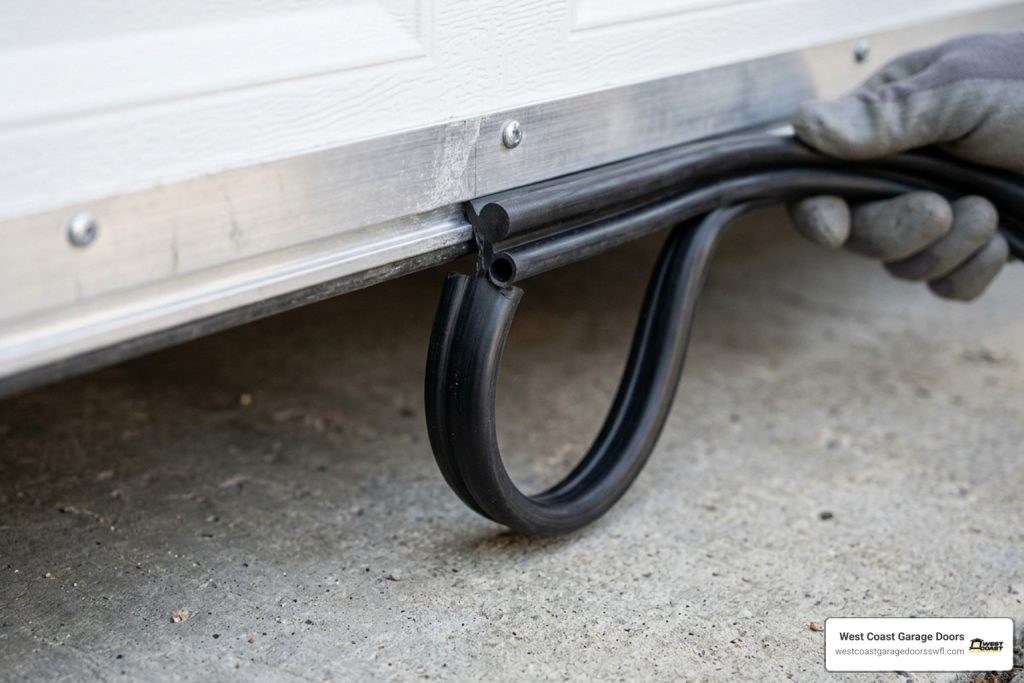
A bead style seal is engineered specifically for garage doors equipped with round-channel bottom retainers. Unlike flat rubber flaps or T-end astragals that feature a wide horizontal fin, a bead end seal features circular, molded bead edges running the full length of both sides of the material.
When you install the seal, you slide both circular edges into the matching round slots on the aluminum or PVC retainer mounted along the bottom edge of your garage door. As both beads are pulled through the retainer channels, the flexible center body bows downward to create a continuous, hollow U-shaped loop.
This U-shaped astragal acts like a shock-absorbing, flexible cushion. When your garage door closes, the loop compresses directly against the concrete apron. This dynamic design solves several common household issues:
- Uneven Concrete Sealing: Concrete slabs settle, crack, or wash away over time, leaving dips and high spots. The hollow U-shape compresses heavily on high points while naturally expanding into low dips to eliminate light gaps.
- Draft and Wind Barrier: By conforming tightly to the floor, it stops exterior drafts that raise cooling costs during hot Southwest Florida summers.
- Pest and Debris Defense: Dirt, dry leaves, lizards, roaches, and rodents look for bottom gaps to enter your home. A tightly sealed astragal blocks these entry points entirely.
- Water Intrusion Prevention: Heavy, wind-driven rains are kept outside where they belong, preventing standing water and interior humidity spikes.
Sizing Profiles: 3-Inch, 4-Inch, and 6-Inch Widths
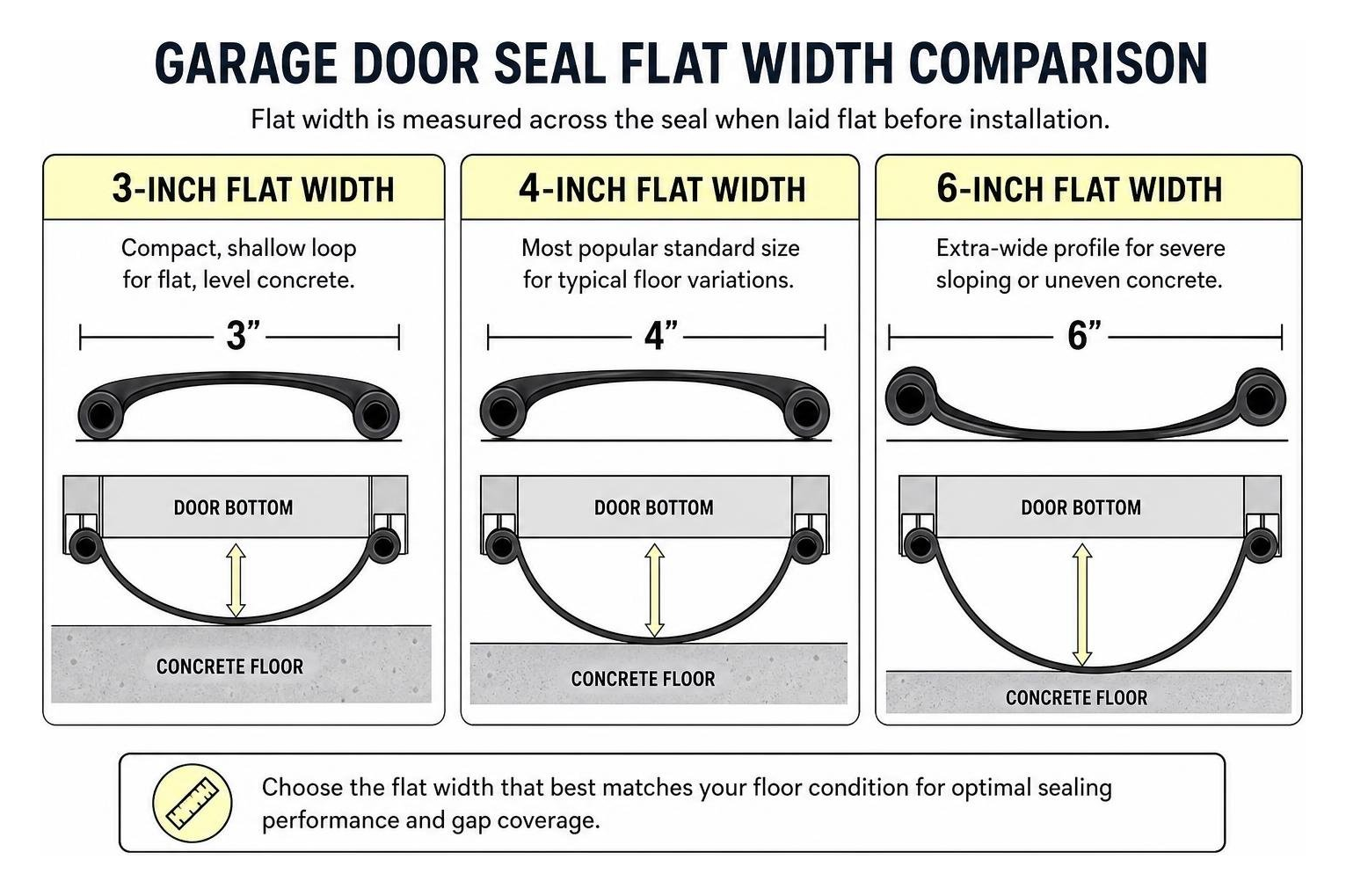
When selecting a replacement seal, width refers to the total measurement of the weatherstripping when it is laid completely flat on a table before installation. Choosing the right flat width determines how far the U-shape loop extends beneath your door bottom:
- 3-Inch Flat Width: Forms a compact, shallow loop beneath the door. It is ideal for flat, level concrete surfaces where the gap between the door and floor is uniform and minimal.
- 4-Inch Flat Width: The most popular standard size for residential overhead doors. It creates a medium-depth loop that accommodates standard floor variations up to 1/2 inch to 3/4 inch while delivering consistent thermal protection.
- 6-Inch Flat Width: A heavy-duty, extra-wide profile engineered for troublesome openings. If your garage slab has severe sloping, deep drainage depressions, or noticeable unevenness, a 6-inch seal provides the extra material needed to bridge large gaps without leaving exposed pockets.
Bead Diameter Differences: 1/8-Inch vs. 3/16-Inch
The most critical factor in compatibility is the circular bead diameter at the outer edge of the strip. While two seals may look identical from a distance, installing the incorrect diameter will cause frustrating installation failures:
- 1/8-Inch (0.125-Inch) Bead: A smaller, compact bead profile designed for narrow retainer grooves. This size is standard on many Finishline commercial and residential doors, as well as select specialty overhead door tracks.
- 3/16-Inch (.198-Inch to 7/32-Inch) Bead: The most widely adopted standard across modern residential sectional garage doors. It fits standard round-channel retainers manufactured by industry leaders like Taylor, Amarr, Clopay, and Midland.
If you attempt to pull a 3/16-inch bead through a 1/8-inch channel, the rubber will bind, tear, and jam in the track. Conversely, placing a 1/8-inch bead into a 3/16-inch retainer will cause the seal to pull out under heavy wind or normal door movement.
Material Comparison: EPDM Rubber vs. Flexible Vinyl and PVC
Weatherstripping is manufactured in three primary compounds: EPDM synthetic rubber, flexible vinyl, and specialized PVC. Each material handles environmental stressors differently.
| Feature / Specification | EPDM Synthetic Rubber | Flexible PVC | Heavy-Duty Vinyl |
|---|---|---|---|
| Primary Color | Matte Black | Black / Charcoal Gray | Classic Gray / Black |
| Low-Temp Limit | Stays flexible to -40°F | Flexible to -30°F / -40°F | Stiffens around 0°F |
| High-Temp / UV Resistance | Exceptional; resists cracking | High; UV-stabilized | Moderate; can harden over time |
| Shape Memory & Cushion | Superior long-term bounce | High resilience | Moderate compression set |
| Best Climate Application | Extreme heat, coastal sun, cold | Universal residential use | Budget residential builds |
High-grade astragal bead end specifications focus heavily on polymer durability. Synthetic EPDM rubber stands out as the premium choice for overhead doors because it does not dry rot, crumble, or lose its memory when subjected to intense direct sunlight. High-quality flexible PVC is another great modern alternative, offering strong resistance to tears, oils, and chemical cleaners.
Choosing the Right Bead Style Garage Door Seal for Your Climate
For homeowners across Cape Coral, Fort Myers, Sanibel, Pine Island, Matlacha, Naples, and Bonita Springs, climate plays a decisive role in material longevity. Southwest Florida combines relentless ultraviolet radiation, high humidity, and torrential tropical rainstorms.
Cheaper, untreated vinyl seals bake under intense afternoon sun, turning brittle within a few seasons. Once brittle, the seal cracks at the stress points along the U-fold, allowing humid air and driving rain to penetrate your garage space. This moisture buildup accelerates rust on hardware, impacts opener electronics, and encourages indoor mildew growth.
Upgrading to a resilient EPDM or heavy-duty UV-treated PVC astragal provides strong thermal performance and moisture isolation. Protecting your home’s envelope with proper weatherstripping safeguards your indoor climate and maximizes your overall garage door replacement ROI by prolonging the operational lifespan of your entire door system.
Brand Compatibility and Sizing Verification
Before ordering replacement weatherstripping, verify whether your door uses standard round retainers. Bead-style astragals are widely compatible with major residential door manufacturers, including:
- Amarr
- Clopay
- CHI Overhead Doors
- Overhead Door (select standard retainer models)
- Midland
- North Central
- Garaga
- Raynor
- Ideal Door
- Ankmar
- Genie
Important Note on Wayne Dalton Doors: Standard round bead seals generally do not work with factory Wayne Dalton integral bottom retainers. Wayne Dalton often utilizes a proprietary oval “teardrop” bead profile. For Wayne Dalton owners looking to utilize universal bead seals, retrofitting the door with an aftermarket aluminum bottom retainer is the best path forward.
Step-by-Step Installation for a Bead Style Garage Door Seal
Replacing your bottom seal is a manageable DIY maintenance task when approached with the right technique:
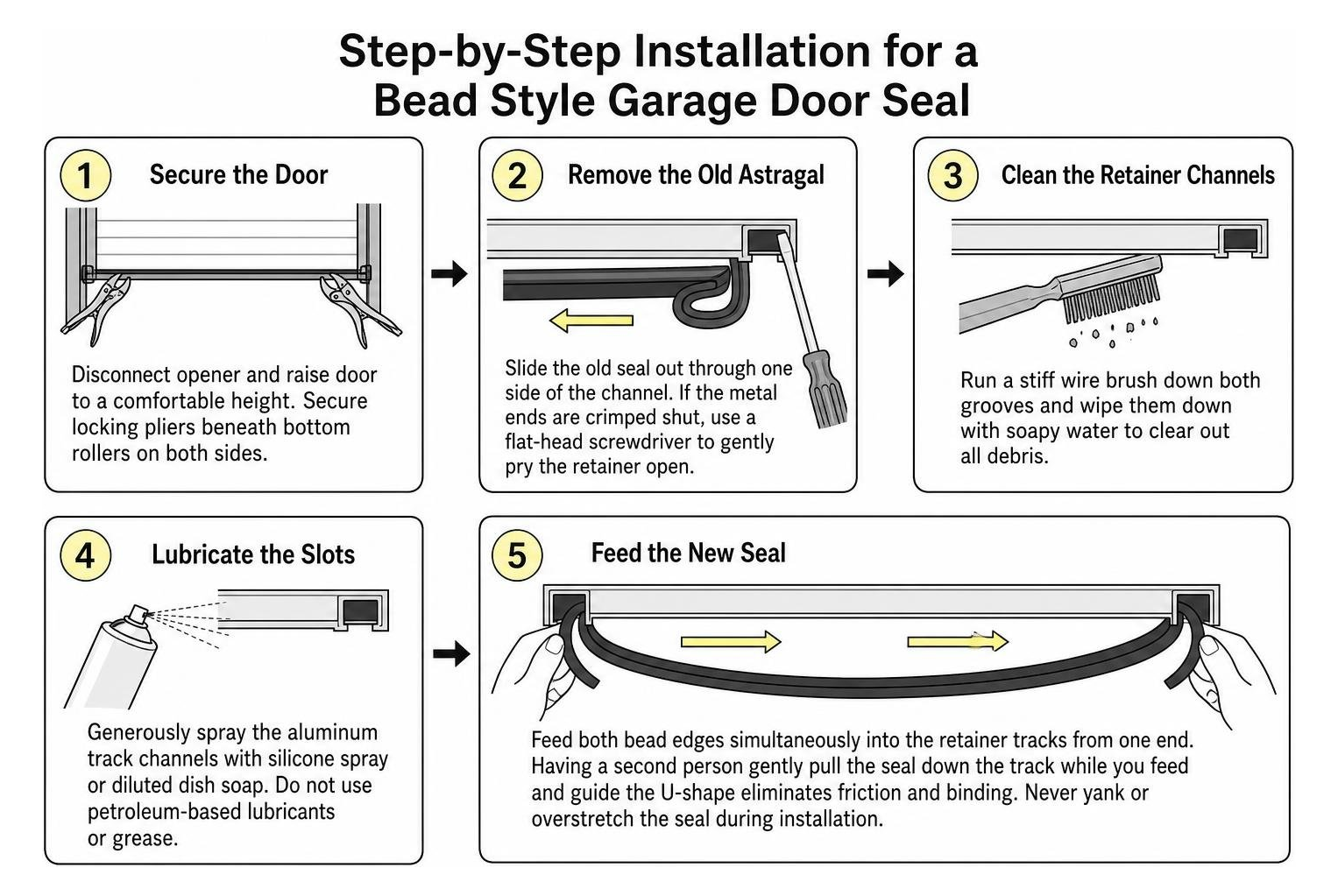
- Secure the Door: Disconnect your automatic opener and manually raise the door until the bottom edge is at a comfortable working height (about chest level). Secure locking pliers beneath the bottom rollers on both sides to prevent the door from moving.
- Remove the Old Astragal: Slide the old seal out through one side of the channel. If the metal ends are crimped shut, use a flat-head screwdriver to gently pry the retainer open.
- Clean the Retainer Channels: Years of dirt, road grime, and salt residue build up inside metal channels. Run a stiff wire brush down both grooves and wipe them down with soapy water to clear out all debris.
- Lubricate the Slots: Generously spray the aluminum track channels with silicone spray or diluted dish soap. Do not use petroleum-based lubricants or grease, as they degrade rubber over time and attract dirt.
- Feed the New Seal: Feed both bead edges simultaneously into the retainer tracks from one end. Having a second person gently pull the seal down the track while you feed and guide the U-shape eliminates friction and binding. Never yank or overstretch the seal during installation.
- Allow Expansion and Trim: All quality replacement seals are cut slightly longer than the stated length. Leave approximately 1 to 2 inches of excess seal extending past each edge of the door. Let the seal rest for 20 minutes to normalize after tension, then trim it with a sharp utility knife, leaving about 1 inch extended on each side. Fold that extra inch back into the U-loop to prevent end drafts.
- Crimp the Ends: Use a pair of pliers to lightly crimp the bottom edge of the metal channel on both ends so the bead cannot slide out during door cycles.
If your retainer track is corroded or bent out of shape, our team provides complete garage door repair service across Southwest Florida to replace damaged aluminum retainers and align track systems.
Integrating Threshold Seals for Maximum Protection
Even the highest-grade astragal can benefit from reinforcement if your garage sits flush with a sloped driveway. Pairing your U-shaped bead seal with a floor-mounted rubber threshold seal creates a high-performance double-barrier defense.
The floor threshold acts as a physical dam glued directly to the concrete with heavy-duty structural adhesive. When the garage door closes, the U-shaped bead seal compresses directly on top of the threshold’s beveled ramp. This eliminates wind-driven standing water from sweeping under the door during severe storms while giving your door a soft, cushioned landing zone.
Frequently Asked Questions About Bead Style Garage Door Seals
Can a bead style garage door seal be cut to length?
Yes. Bead-style astragals are manufactured from flexible PVC, vinyl, or EPDM rubber that cuts cleanly with a sharp utility knife or heavy-duty shop shears. Always measure your door width first and add 2 to 3 inches of total length before making your cut. This extra buffer accounts for thermal contraction during cooler weather and allows you to tuck the outer edges inward for a tight seal.
Will a bead end weather seal work on Wayne Dalton garage doors?
Standard round bead seals (1/8-inch and 3/16-inch) typically do not fit standard Wayne Dalton factory bottom channels without modification. Wayne Dalton doors frequently employ a proprietary teardrop-shaped bead that is flatter and wider on one side. If you have a Wayne Dalton door, you must purchase a Wayne Dalton-specific replacement astragal or install a universal aluminum bottom retainer that accepts standard bead or T-style seals.
How do I know if my door needs a 1/8-inch or 3/16-inch bead seal?
The most accurate method is to remove a small 1-inch section of your existing seal and measure the circular diameter of the bead edge using a digital caliper or standard ruler. A 1/8-inch bead measures exactly 0.125 inches (similar to the thickness of two pennies stacked), while a 3/16-inch bead measures roughly 0.198 to 0.218 inches (nearly 1/4 inch thick). You can also inspect the entry channel on your bottom metal retainer: if the circular slot is noticeably wider than a standard pencil lead, it is almost certainly a 3/16-inch channel.
Conclusion
A well-fitted astragal is one of the most cost-effective upgrades you can make to protect your garage from driving rain, excessive heat, outdoor dust, and pests. By identifying your retainer’s bead diameter, choosing the right flat width for your floor, and selecting an EPDM rubber or premium PVC compound suited for coastal climates, you ensure year-round protection and energy savings.
Whether you need a quick bottom seal replacement, hurricane-rated door upgrades, or full system maintenance, our locally trained technicians at West Coast Garage Doors are ready to deliver same-day service and lasting peace of mind throughout Cape Coral, Fort Myers, and surrounding communities.